Bisbee
Bisbee’s rise coincided with a rapid rise in the use of copper. Alexander Graham Bell patented the telephone in 1876, and electric lighting and power distribution started to grow rapidly after that. This created an enormous demand for copper, and Bisbee thrived.
The first copper mine opened in 1881, around the same time Tombstone became a boom town. Copper deposits in the Bisbee area were so extensive that mining was active all the way up to 1975. When I arrived I was a little surprised at the way the town is laid out. Driving in on the main road my first view of Bisbee was all these colorful, close-packed houses built on steep hillsides with winding narrow roads. It’s really an impressive view, almost like something I would expect to see in Europe.
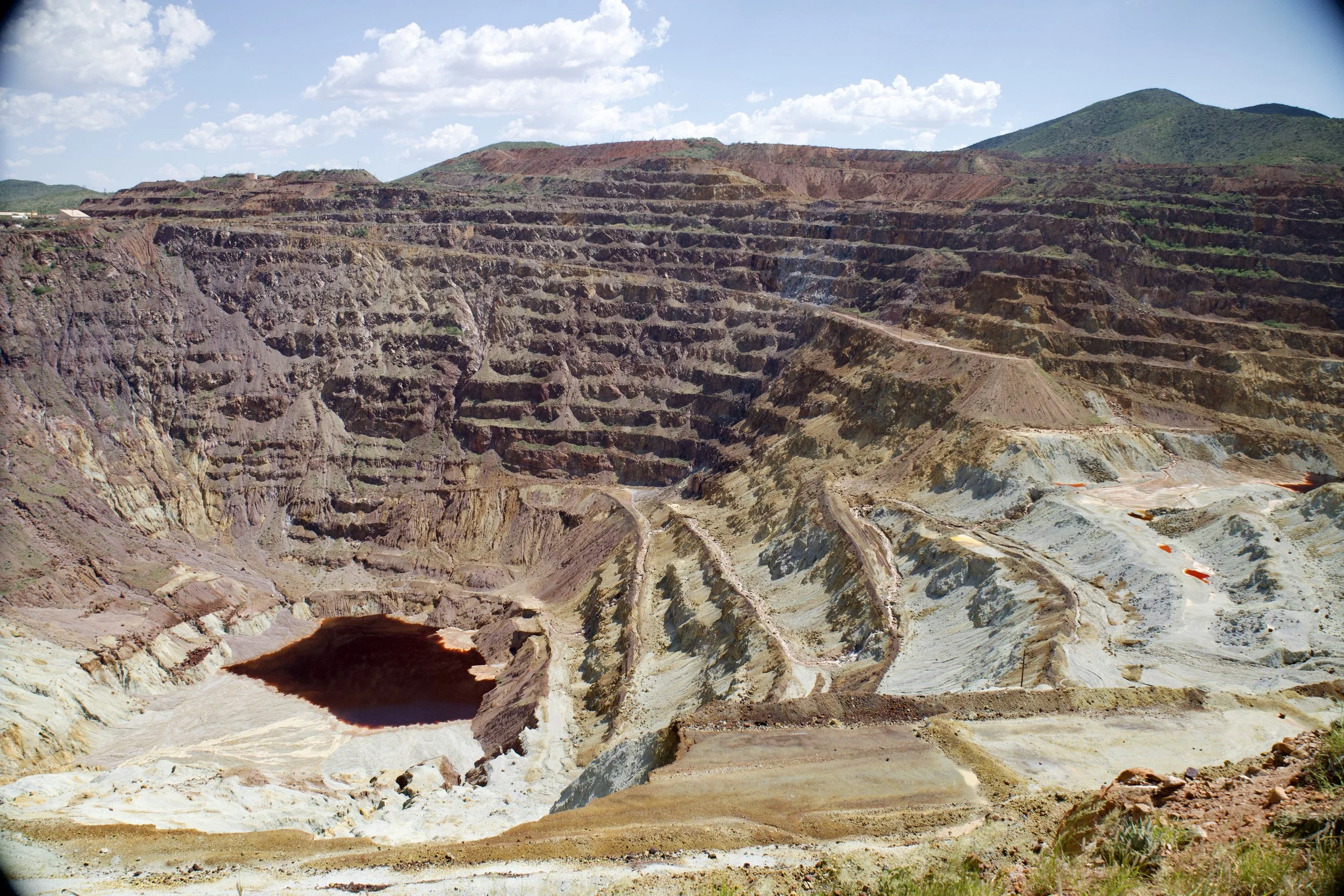
As I drove into Bisbee, I saw the first unmistakable evidence of its mining history: the Lavender Pit, a great, big hole in the ground. Even the miners weren’t prepared for how large this pit would become. The town built up around the mining operations, but the pit grew so large they eventually had to relocate 250 homes and 20 businesses. Miners extracted 600,000 tons of copper from this pit.
There are two places I recommend you visit if you are ever in Bisbee: the Bisbee Mining and Historical Museum and the Queen Mine tour.
The museum is a Smithsonian Affiliate, and it shows in how well curated it is. The ground-floor exhibits explore the history of mining in Bisbee, which is essentially the history of Bisbee. Upstairs is a well-done exhibit dedicated to the miners, the lives miners led, and the technologies they used.
The Queen Mine tour takes you into the tunnels the miners used for underground mining. The tour guides are very entertaining and we learned some surprising things.
For example, miners worked in teams of two and each team was given a single candle when going into the mine to work. We had battery-powered headlamps for our tour and it was still dark. I can’t imagine what it was like to work by the light of one candle, but they did it.
The miners also used mules to pull the mine cars around. Those mules lived underground full time, which meant they were fed there. With the mule feed came rats. When I first heard this I assumed the miners must have hated that. But no, the miners loved having rats down there. The rats felt tremors long before the miners did and would run out of an area before a cave-in, with the miners hot on their heels. The miners actually fed the rats after the mules were replaced by electric trolleys.
But here is what really blew my mind. Over the years miners excavated over 2,500 MILES of tunnel in the Bisbee area. That’s enough tunnel to stretch from Los Angeles to New York City with some left over. And it’s all under one small community in southeast Arizona.
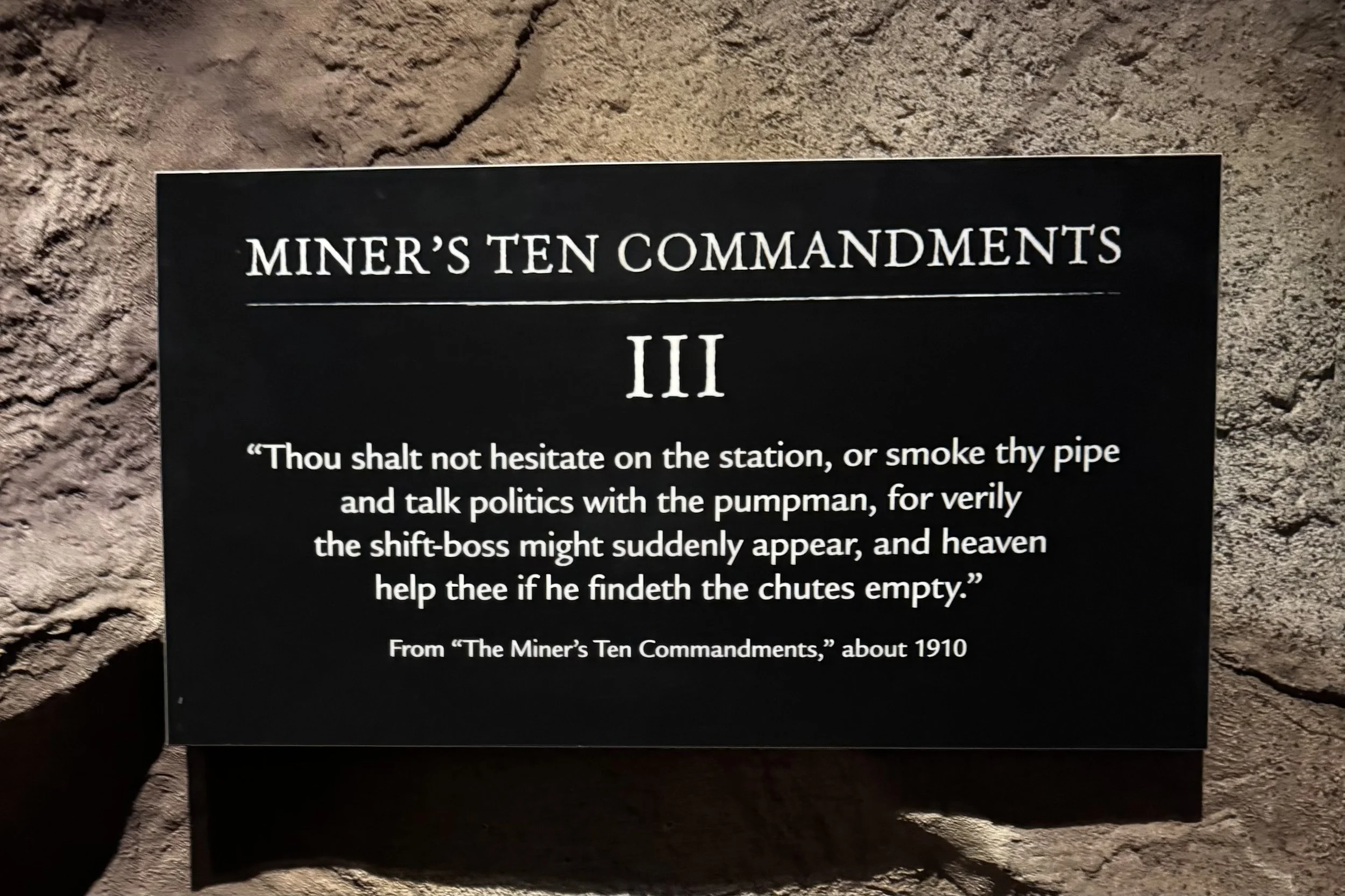
There is one amusing thing from the upstairs area of the museum, about the miners’ lives, I would like to share: the Miner’s Ten Commandments. Plaques of the commandments are placed throughout the upstairs museum area.
Miner’s Ten Commandments (Anonymous)
I
Thou shalt not slumber late in the morning, but shall rise ere it is day and break thy fast, for he that goeth to the mine late getteth no candles, causing the transgressor to grope in the darkness and the shift-boss to indulge in profanity.
II
Thou shalt not take up thy position in the center of the cage when descending or ascending the shaft, neither shalt thou appropriate in thy person more room than the law allows, for thou are but of little consequence among a whole cage-load of men, no matter what thou thinkest to the contrary.
III
Thou shalt not hesitate on the station, or smoke thy pipe and talk politics with the pumpman, for verily the shift boss might suddenly appear, and heaven help thee if he findeth the chutes empty.
IV
Thou shalt not mix waste with ore, neither shalt thou mix ore with waste, thou nor thy partner, nor the mucker within thy drift, for surely as thou doest these things the mine will stop paying dividends, and thy name will be “mud” over the length and breadth of the camp.
V
Thou shalt not eat onions when going on shift, even though they be as cheap as real estate in Clifton, unless thy partner participateth likewise, for that bulbous root exciteth hard feelings in the heart of the total abstainer, and causeth the interior of a mine to be an unpleasant place.
VI
Thou shalt not address the boss by his Christian name, neither shalt thou contradict him when thou knowest he is lying, but thou shalt meekly say “Yes“ or “No“ to all that he suggests; and laugh when he laughs and keep on laughing when he relateth a story, even though it be older than thy grandmother.
VII
Thou shalt not steal thy neighbor’s mops, nor his picks nor his drills; neither shalt thou carry away on thy person or in thy lunch-basket low-grade ore from the mine, for thou wilt find it will take a lifetime to obtain a mill-run.
VIII
Thou shalt not have an opinion concerning thy place of work, for thy employer payeth a fat salary to a school-of-mines expert for constructing in his mind bonanzas that don’t exist, so thou shalt refrain from theorizing, and concentrate thy efforts on drilling and the blasting of an abundance of powder.
IX
Thou shalt not, in order to breathe, steal from the drilling machine compressed air intended for drilling purposes. Thou shalt not go on strike lest thou be turned adrift on a cold and cheerless world; neither shalt thou demand thy pay, for the company’s directors in the East know not that thou liveth, neither care they a tinker’s dam.
X
Thou shalt work and break ore every day, the Sabbath included, for verily the board of directors aforementioned hath assumed the prerogatives of the Almighty, and if thou refuseth to toil as they dictate thou, and thy dog and all that thou possesseth will soon be hitting the trail for Tonopah.