Curiosities
Living Curiosities
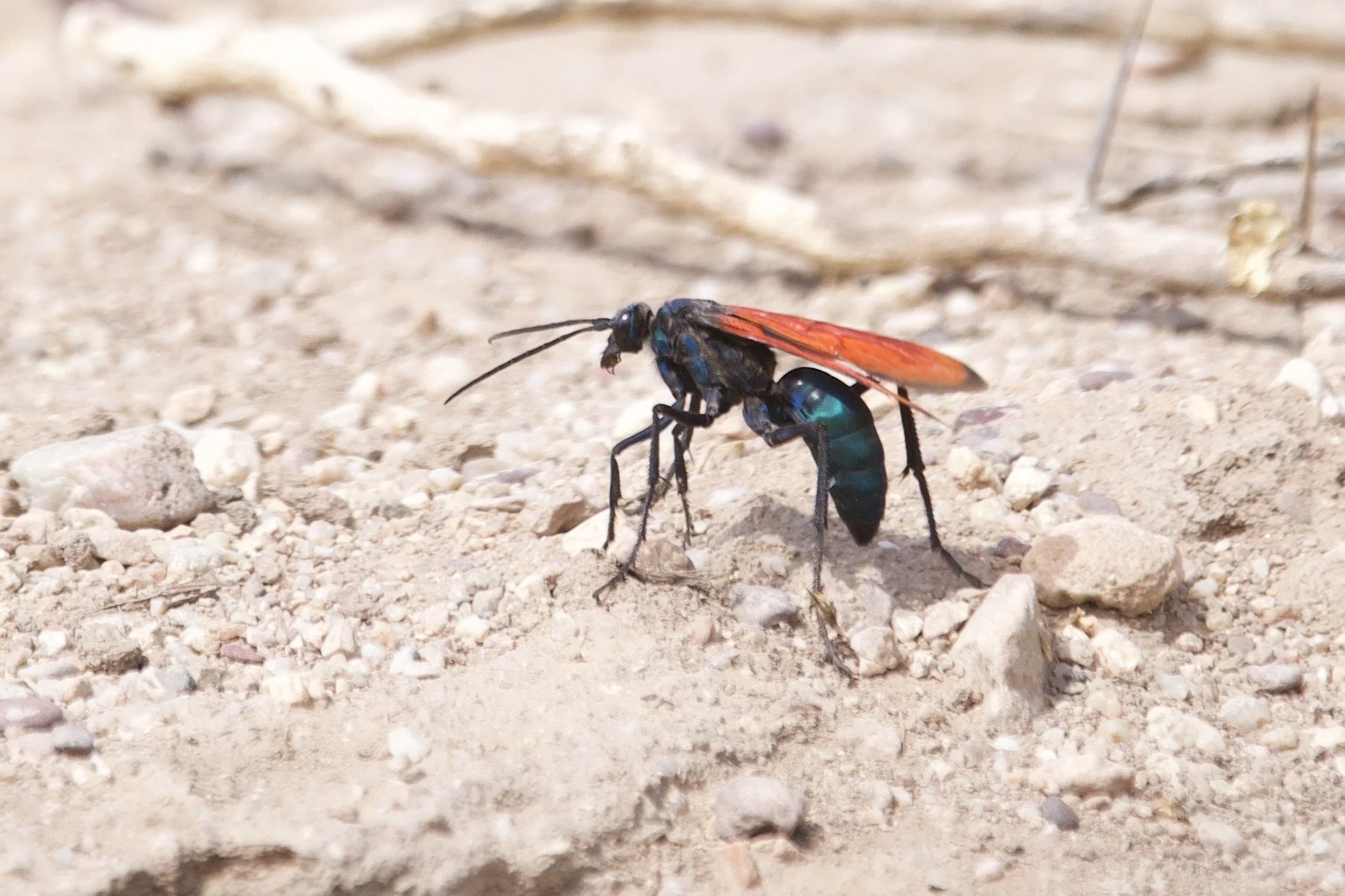
This Tarantula Hawk-Wasp really caught everyone’s attention. It’s beautiful. But when the guide told us what it does we also realized how gruesomely deadly it is, to tarantulas.
These wasps will sting a tarantula and paralyze it, then drag the paralyzed spider into a burrow, lay a single egg on its abdomen, then seal the burrow. After the egg hatches, the larva burrows into the abdomen of the still-living but paralyzed tarantula and starts eating the non-vital tissues and organs first, keeping the spider alive as long as possible. Eventually it eats the vital organs, killing the tarantula, and develops into an adult. Wow.
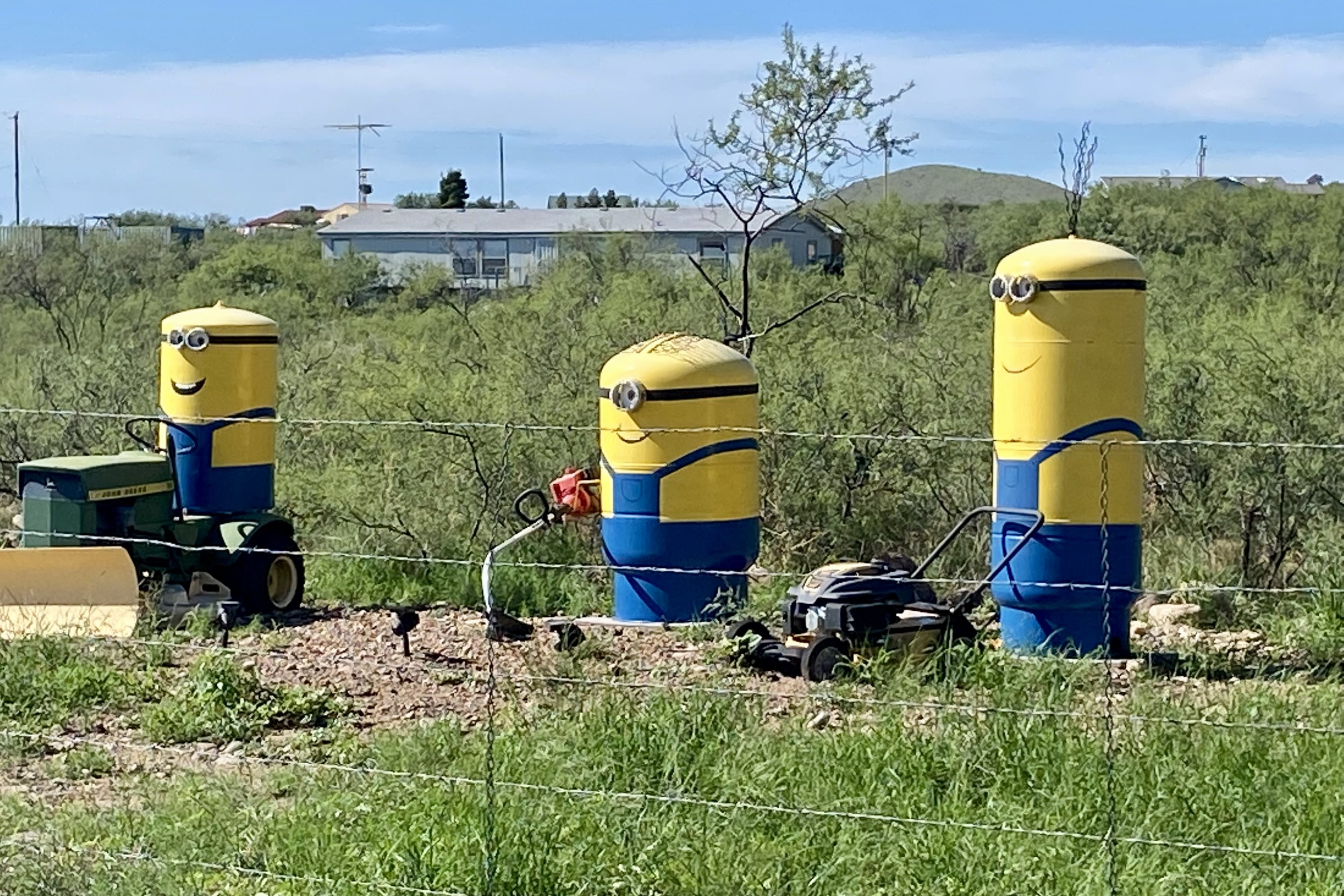
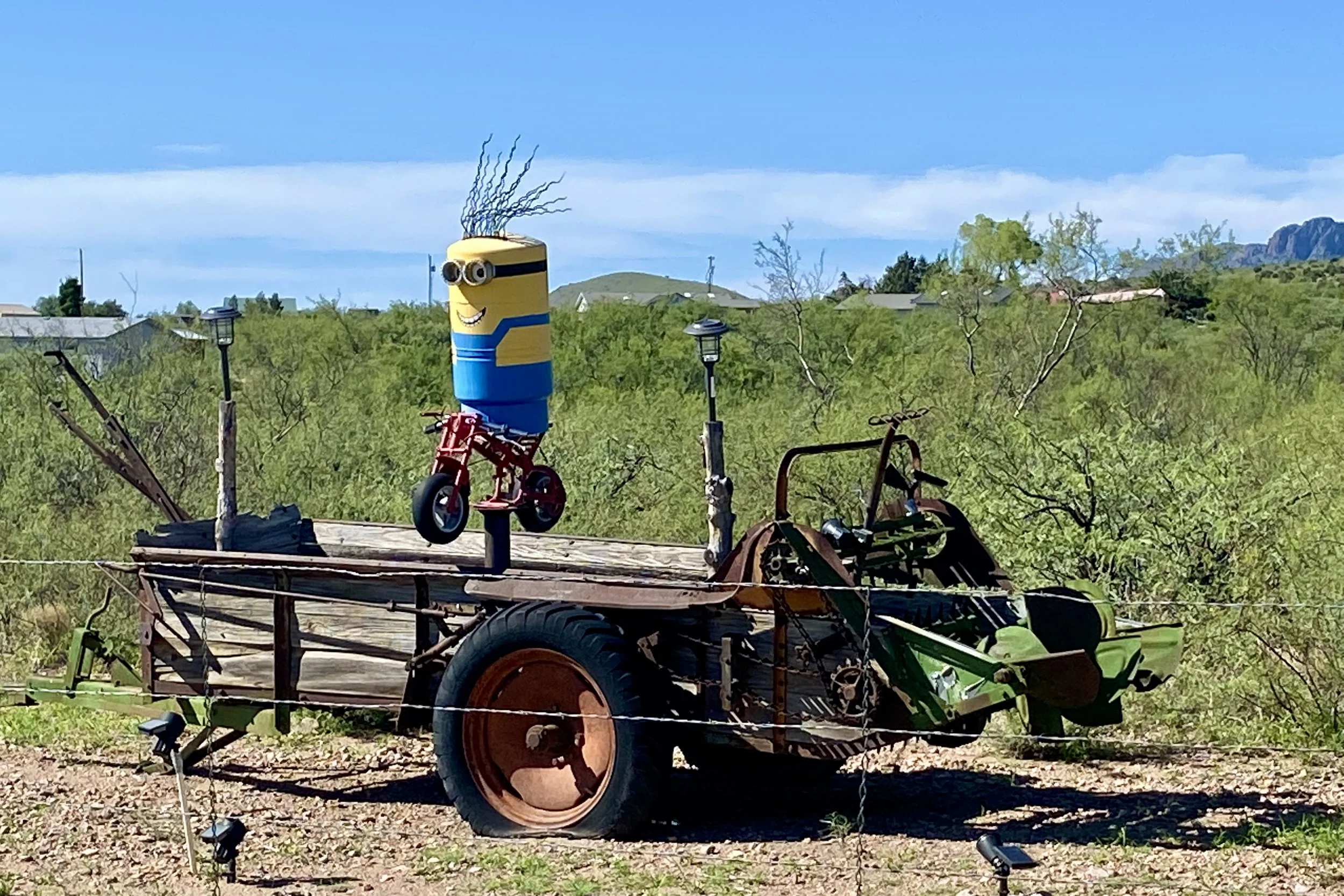
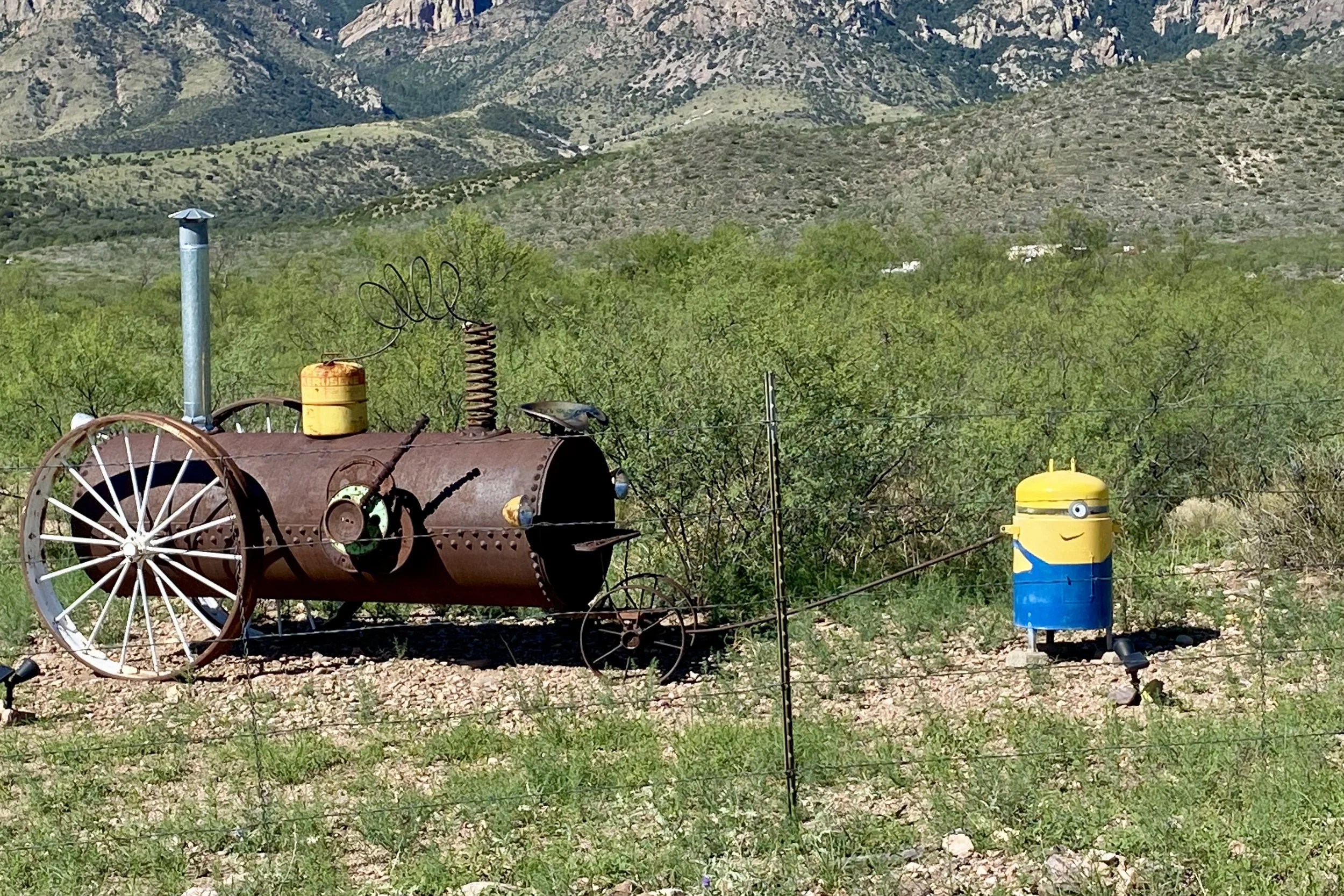
One morning we were driving from Rusty‘s RV Ranch, where we were staying for a couple of days, down a long, straight road to Portal, Arizona for a day of birding in the Chiricahua mountains, when we saw these Minions. Never in our wildest dreams did we think we would see something like this on the road to Portal.
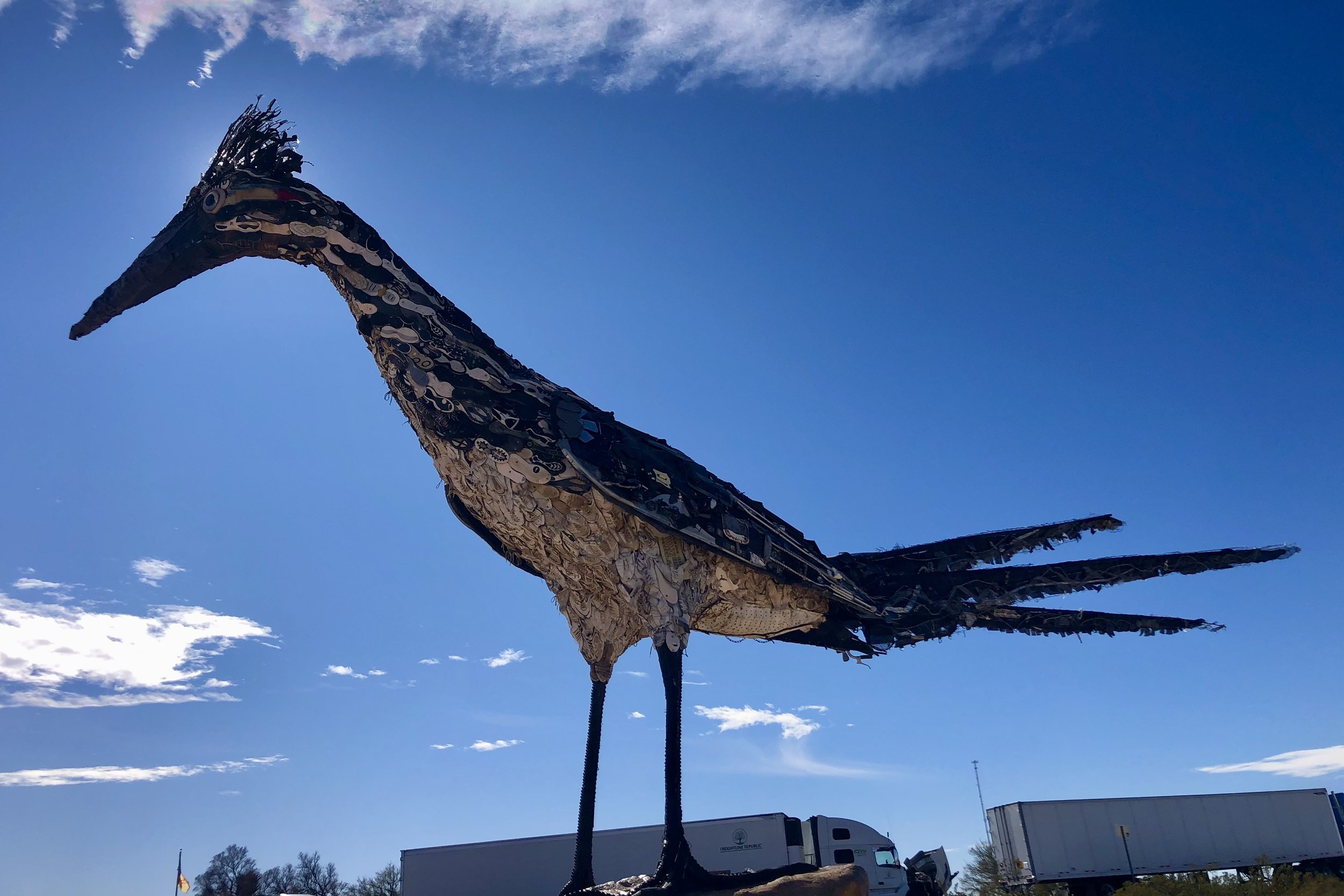
Driving out I-10 through Texas and New Mexico on the way to birding in Arizona also revealed some curiosities. Take this giant roadrunner… thing. Look at those 18-wheelers behind it. This thing is HUGE!
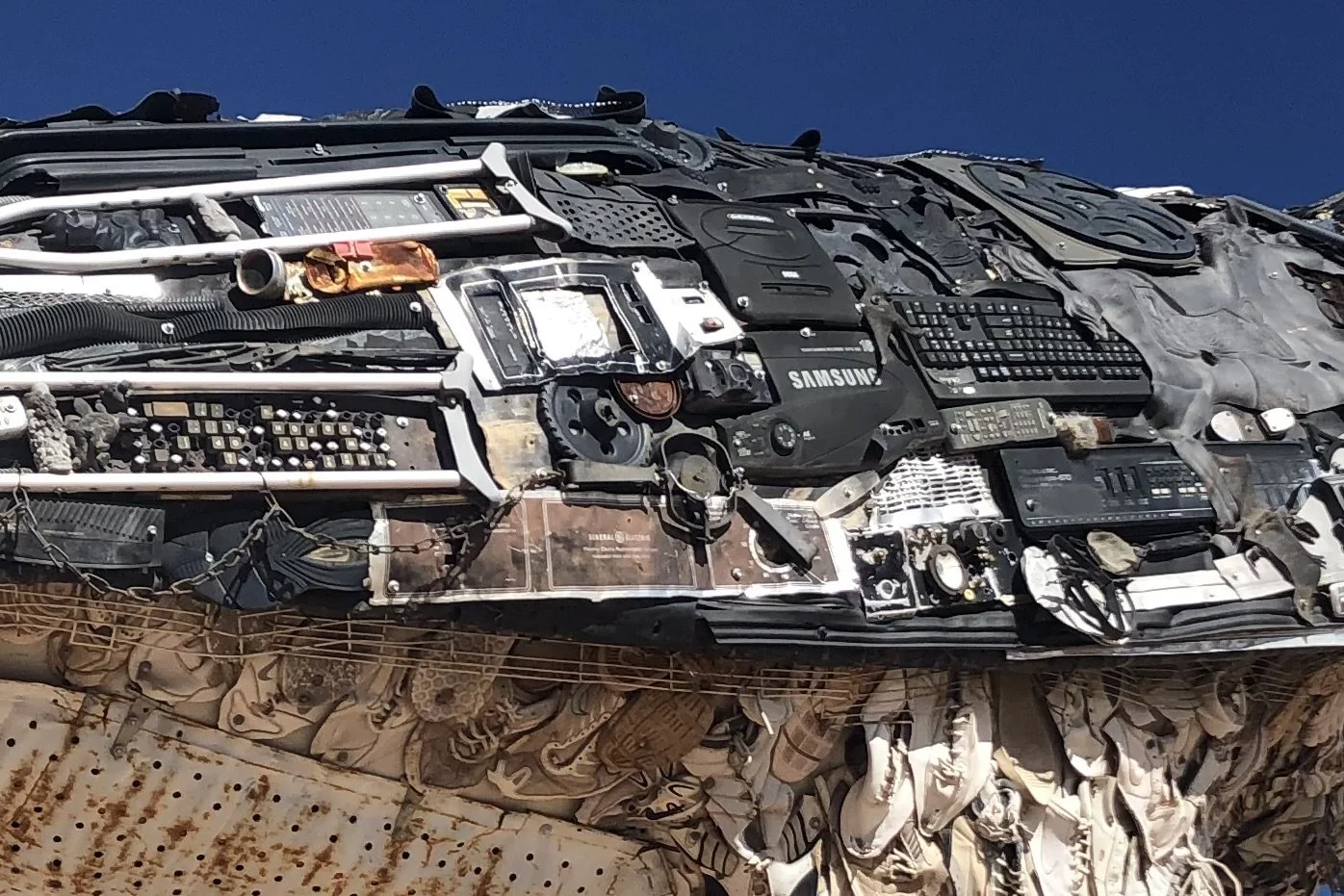
As I photographed this giant roadrunner it got even more interesting. Look at how it’s made. This isn’t something you can easily forget.
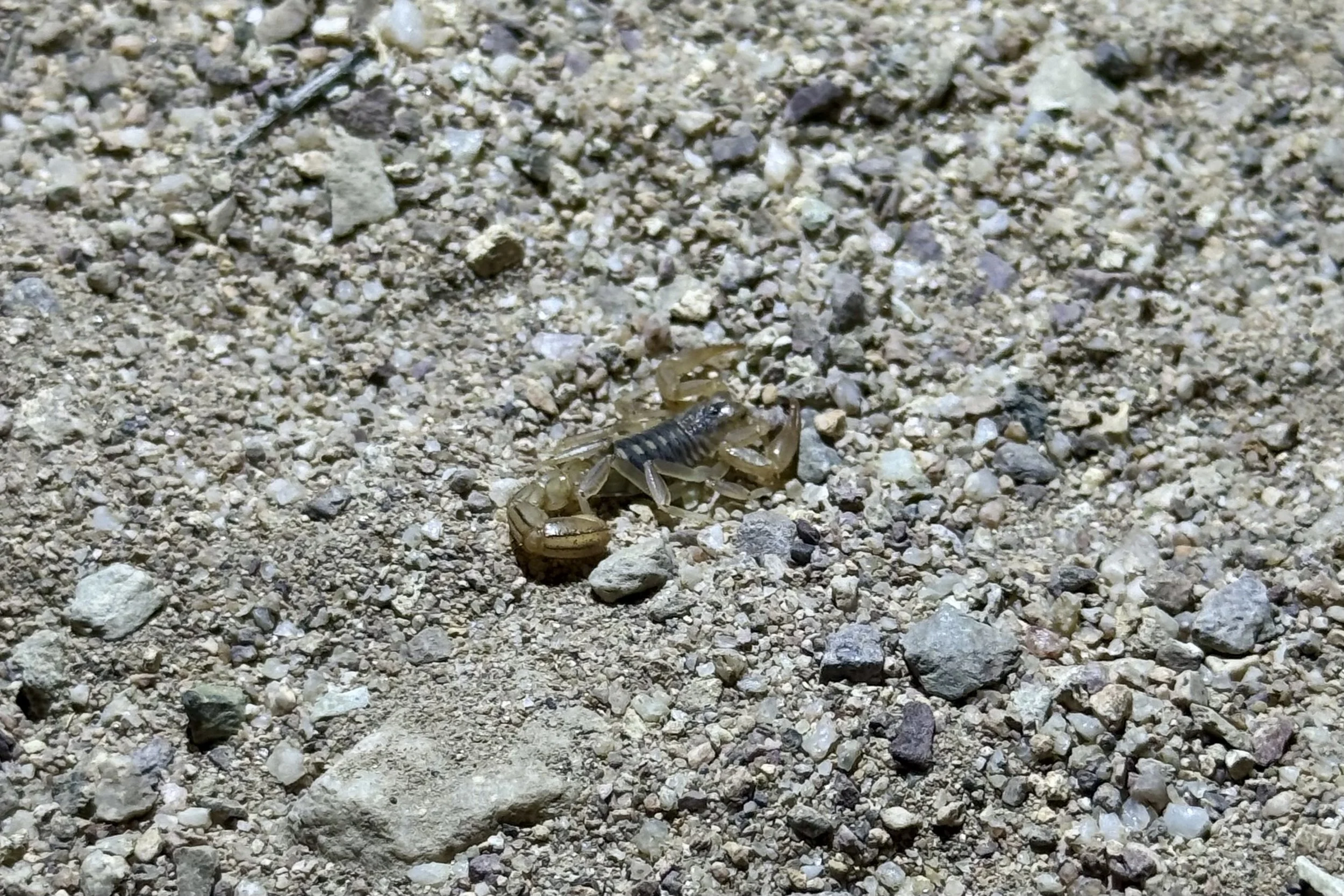
The Arizona desert is well-known for its scorpions. Many of them are very small, not the size we see in movies. We were owl-hunting one night and came across this little guy, a Stripe-Tailed Scorpion.
The guide shined his flashlight on it so we could all see it. But then he really blew our minds when he said, “Watch this…” turned off his flashlight, and shined a UV flashlight on it.
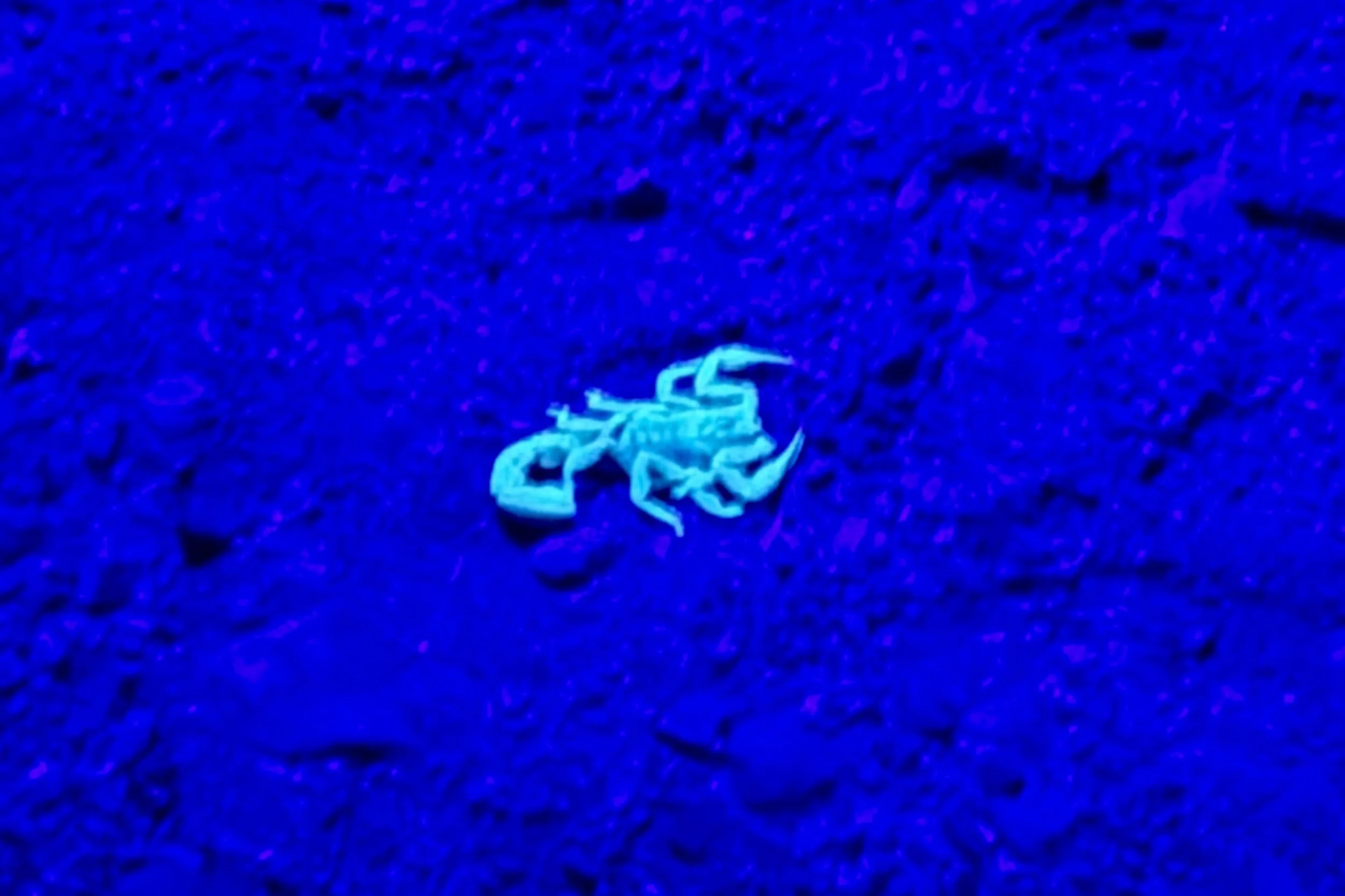
I did some research on why scorpions glow like this under UV light and the results were interesting. Compounds including beta-carboline and a coumarin derivative (whatever those are!) in the exoskeleton are what fluoresce. BUT, as far as I could tell, nobody knows for sure WHY those compounds are there, what biological purpose they serve. After we saw this several people in the group kept their UV flashlights on for the rest of the night.
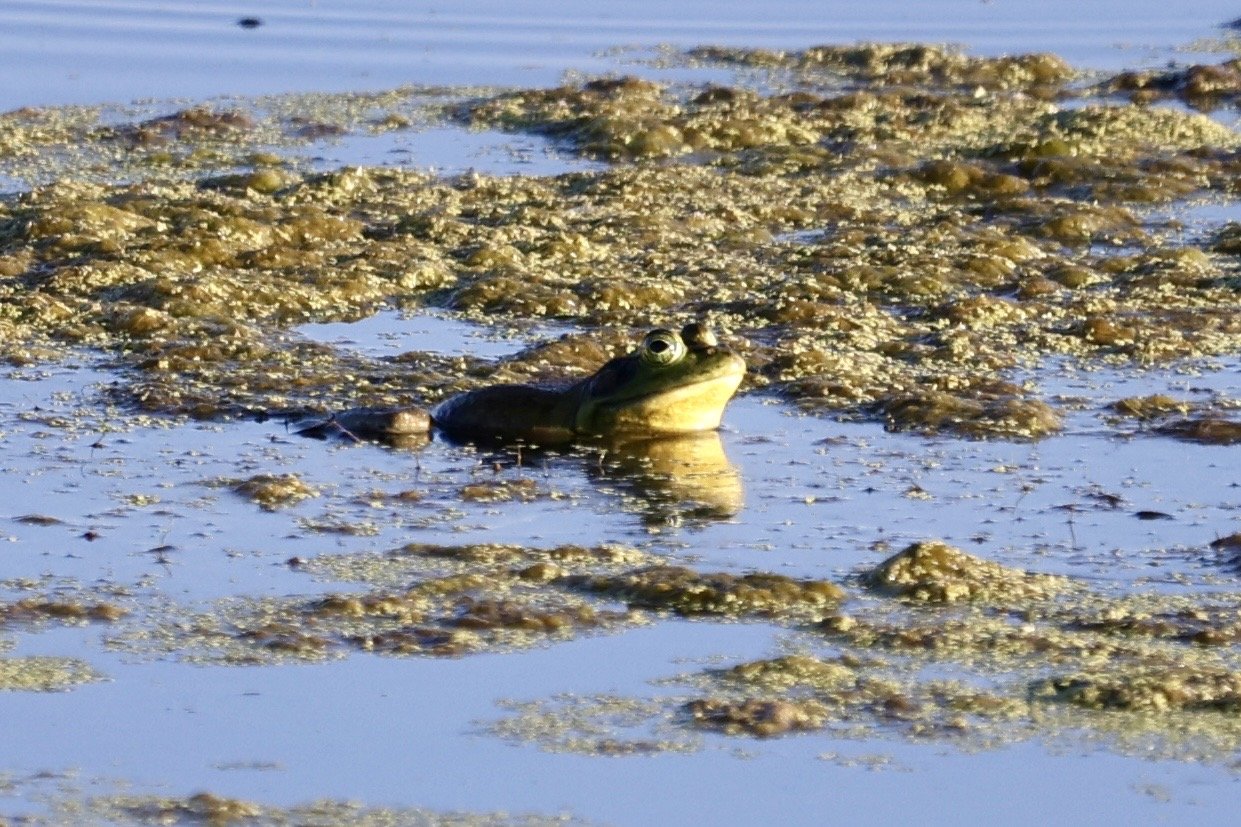
When I photographed this American Bullfrog I casually remarked to the guide that I hadn’t expected bullfrogs in Arizona, and he told me a sad story. Bullfrogs and bass, among other species, are not native to Arizona. They were introduced by humans for sport and food and are ravaging native frog and fish populations. He painted a very bleak picture.
Later I found out something a little more encouraging. Wildlife managers are actively removing the bullfrogs and trying to remove bass where they threaten native species. There’s hope.